
Cooksin – Crime and Redemption in the New West was a labor of love – or, more on point, a letter of love. My wife was a big fan of the movies of the “Golden Age of Hollywood”. She didn’t really watch anything on TV other than Turner Movie Classics (TMC) and the American Movie Channel (AMC). Those old black & white films told great human stories, sometimes corny and melodramatic, but almost always soulful and heartfelt. We humans were a different breed, back then.
I am always taken by how smart filmmakers used to be – or perhaps I should say that screenwriters used to be. Even more impressive, to my mind, is the way those old films credited their audiences, giving them tales with real depth, knowing that their audiences were also readers. Peoplel did that back then.
I wanted to write something my wife might possibly enjoy, and I spent a year going to the Vallejo, California library, sitting in a cubicle, and writing this book in long hand. I would write for hours, then bring it home and type it up. This was just before our first child was born, and it was in a period where we were going through a rough patch in life. Our marriage was tight, but we were under pressure.
I was a mess, writing this book. I think I was working on it as I was because I wasn’t getting a lot of work, we were struggling financially, and writing as I was got me out of the house. I would sit in that cubicle in the library and write with tears streaming down my face, which is not particularly unusual for me. I tend to get wrapped up in my characters. I can’t really be them without feeling what they feel, and I am hopelessly sentimental.
The characters in Cooksin – and Cooksin himself – were all inspired by my farm relatives. I come from pioneering stock, particularly on my dad’s side of the family, and have been around farmers and ranchers quite a lot. They are a unique and special breed.
My dad’s sister’s family were/are farmer-ranchers in Nebraska, and when I was a kid they invested in a huge Charolais bull that they named Cooksin. He was white, of course, and two-thousand pounds of breeding dynamite. When he arrived in Nebraska – in those days, Charolais had to be imported from Europe – and came through little Hays Center, people gathered around to look at him. They’d never seen anything like him.
I was mesmerized by Cooksin just because he was like Moby Dick, pillar white standing out there in the corral. He was just enormous, and quite beautiful. I am told that he was a tremendous breeder and gentle as a lamb.
Cooksin (the novel) is about an uneducated guy (not particularly cleverly named Jake Jobbs) who goes off to military service and gets involved with a bad crew, a group of thieves. When he musters out he continues his association with these types, going to work for a gangster named Lorenz Pico. Pico runs an operation throughout the midwest, stealing livestock, often slaughtering it on site for immediate sale on the black market, and stealing farm equipment, which his crew disassembles and parts out.
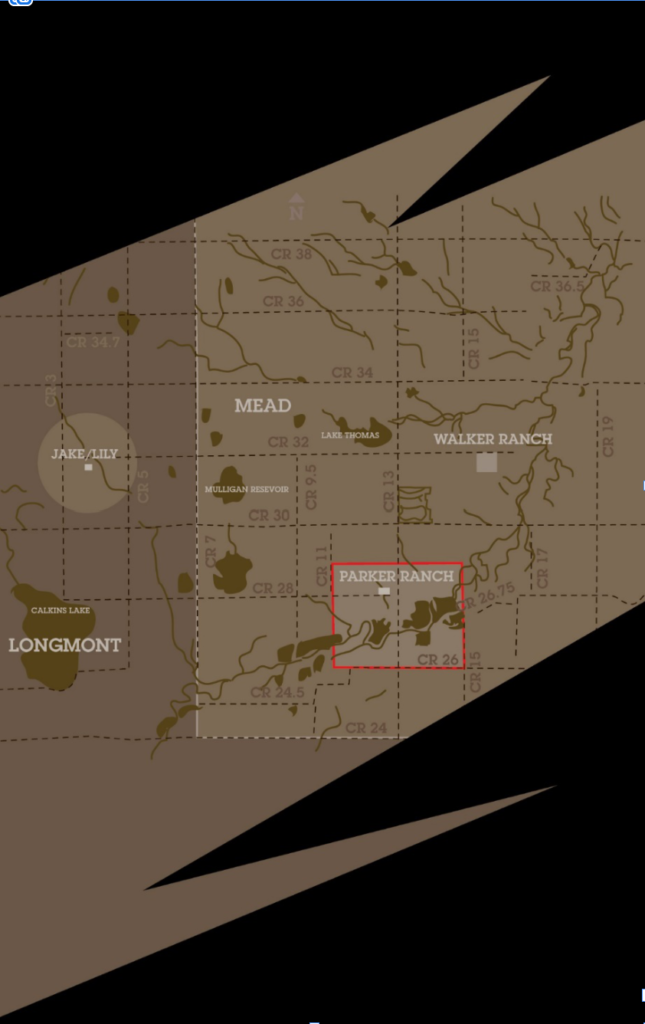
Jake’s role, in the operation, is to infiltrate farm communities particularly rich in the kinds of things Pico and his crew vandalize. For all Jake’s negatives, he is smart and a charmer, a charismatic bad boy who finds work with a wealthy rancher in the Longmont, Colorado area. Frank Walker runs a large cattle operation and employs a number of ranch hands who live in a bunkhouse on his property. He is a widower, and a guy whose heart has been broken by the death of his beloved son, who loses his life in the service. The story begins just as the Korean War is ramping up.
Frank is bitter and voracious. He has been expanding his operation, buying up property all around the county, apparently trying to fill the void he feels in his life with the loss of his loved ones. All that remains of his family is his teenaged daughter Lily, who he has no idea how to handle. She is frustrated with her father and her home life, and she strikes up an illicit affair with Jake, who she knows her father dislikes intensely.
Also working for Frank Walker is a young kid named Py, who has nowhere to go in the world. He was raised by a single mother, who died, so he is doing his best to survive among Walker’s tough ranch hands. He is hopelessly over-matched, the lowest guy in the pecking order, often tasked with working with another weak-link crew member, an old man named Walt.
One day, when Py is working on a hay truck with Walt, there is an accident and Walt is killed. Jake was supposed to be there to manage Py and Walt, but he is mysteriously missing. When Frank Walker arrives on the accident scene, he realizes that Jake wasn’t there to do his job, and moreover finds a bottle of whiskey in the hay truck, which he figures is Jakes. (It is.) Frank fires both Jake and Py.
Py is briefly lost, unemployed and probably unemployable, on the streets of Longmont, when he encounters Jake, who unbeknownst to him has become involved with a local woman named Joanne.
Joanne has only recently returned to Longmont from California, returning home to take care of her aging father, Pete, whose property abutts that of Frank Walker, and who is under a lot of pressure to sell.
Pete is old and out of gas, and has been a widower for years. He has fallen into as bad of a state of repair as has his property. Pete has farmed and run cattle his whole life, but there is almost nothing left of his herd. He has rolled the dice and put the last of his money on a large Charolais bull he calls Cooksin. Pete is hoping that the giant bull will live up to his hype and deliver a healthy bunch of Charolais/Angus hybrids. Big creatures, good at auction.
Pete’s much buzzed-about venture infuriates Frank Walker, and when he learns that Pete has taken in Jake and Py, and begins to suspect that Jake is involved with his daughter, he grows violently confrontational. It is a deadly nature that infiltrates the ranch hands who depend on him for employment. Particularly invested is Frank’s handsome and capable young foreman, who wants badly to win the favor of Frank’s lascivious daughter.
Soon enough, Jake finds himself caught in a deadly predicament. His relationship with Joanne develops in a way that leaves him protective of her and her dad, and he develops a fatherly relationship with Py, who idolizes him. (Jake has found himself a family.) He finds himself in trouble with local authorities, when he tangles with Walker, who wants him jailed, and this leads to anxiety in the criminal boss Pico, who senses that Jake wants to back out of his deal – and there is no backing out of any deal with Lorenz Pico. He is a killer, a monster.
I’m not going to reveal anymore about where the story goes. I believe it accomplished its purpose, which was to send a message about the redeeming power of love, and to do it in a style unfortunately lost to time. It is a wild ride that comes to a thrilling end – available from Amazon and other outlets.